

Introduction: The Timeless Charm of Handmade Keepsakes
In a world increasingly dominated by mass-produced items, there’s an undeniable magic in creating something with your own hands. And when it comes to crafts that evoke warmth, nostalgia, and heartfelt sentiment, DIY Salt Dough Ornaments stand in a league of their own. This isn’t just a craft; it’s a cherished tradition, passed down through generations, offering a simple yet profound way to capture memories.
Whether you’re looking for an inexpensive way to personalize your holiday decorations, searching for a fun rainy-day activity with kids, or simply wanting to create unique, heartfelt gifts, salt dough is your answer. With just three humble pantry ingredients—flour, salt, and water—you can transform a basic dough into intricate, lasting keepsakes that carry the imprint of your creativity.
As a blog dedicated to sweet recipes, you might wonder why we’re delving into salt dough. The answer is simple: just like our favorite cookies, salt dough begins with a comforting dough, shaped with cutters, and baked to perfection. It’s the “sweet” side of crafting, providing a creative outlet that complements the joy found in baking. Plus, these ornaments can be designed to look exactly like your favorite festive cookies, without the temptation to eat them!
This comprehensive guide will walk you through every step of making perfect salt dough ornaments, from mixing the ideal dough to drying, decorating, and preserving your creations. Get ready to roll up your sleeves and craft beautiful, lasting treasures that will be cherished for years to come.
The Foundation: What is Salt Dough?
Before we dive into the “how-to,” let’s briefly touch on what salt dough actually is. Essentially, it’s a simple, non-toxic modeling material made from common kitchen staples. Its primary components are flour (for structure), salt (for preservation and hardness), and water (to bind it all together).
Historically, salt dough has been used for centuries as a folk art medium, particularly for creating decorative items and lasting figurines. The high salt content acts as a natural preservative, helping the dough dry hard and resist mold and pests, making it an excellent choice for durable, long-lasting ornaments. It’s incredibly forgiving, easy for all ages to work with, and transforms into a surprisingly robust material once properly dried. Think of it as a DIY clay that bakes into a ceramic-like hardness, ready for endless creative possibilities.
The Essential Recipe: Your Salt Dough Blueprint
Crafting the perfect salt dough begins with the right proportions. This recipe provides a reliably smooth and workable dough, ideal for cutting and shaping.
| Category | Craft, DIY | Prep Time | 15 minutes |
| Skill Level | Easy | Drying Method | Oven Bake or Air Dry |
| Yield | Approx. 10-15 medium ornaments | Storage | Indefinite (if sealed) |
Ingredients
- 2 cups (approx. 240g) All-Purpose Flour (or plain flour)
- 1 cup (approx. 290g) Fine Grain Salt (table salt is best, avoid coarse or rock salt)
- 1 cup (approx. 240ml) Warm Water (adjust as needed)
Equipment
- Large mixing bowl
- Sturdy spoon or spatula
- Measuring cups and spoons
- Rolling pin
- Cookie cutters (various shapes and sizes)
- Drinking straw, skewer, or pencil (for making hanging holes)
- Parchment paper
- Baking sheets
- Wire cooling rack
Optional for Decoration & Preservation
- Acrylic paints, paintbrushes
- Glitter, sequins, beads
- Clear sealant (mod podge, clear spray varnish, or clear nail polish)
- Ribbon, string, or twine for hanging
Step-by-Step Guide: From Dough to Dried Ornament
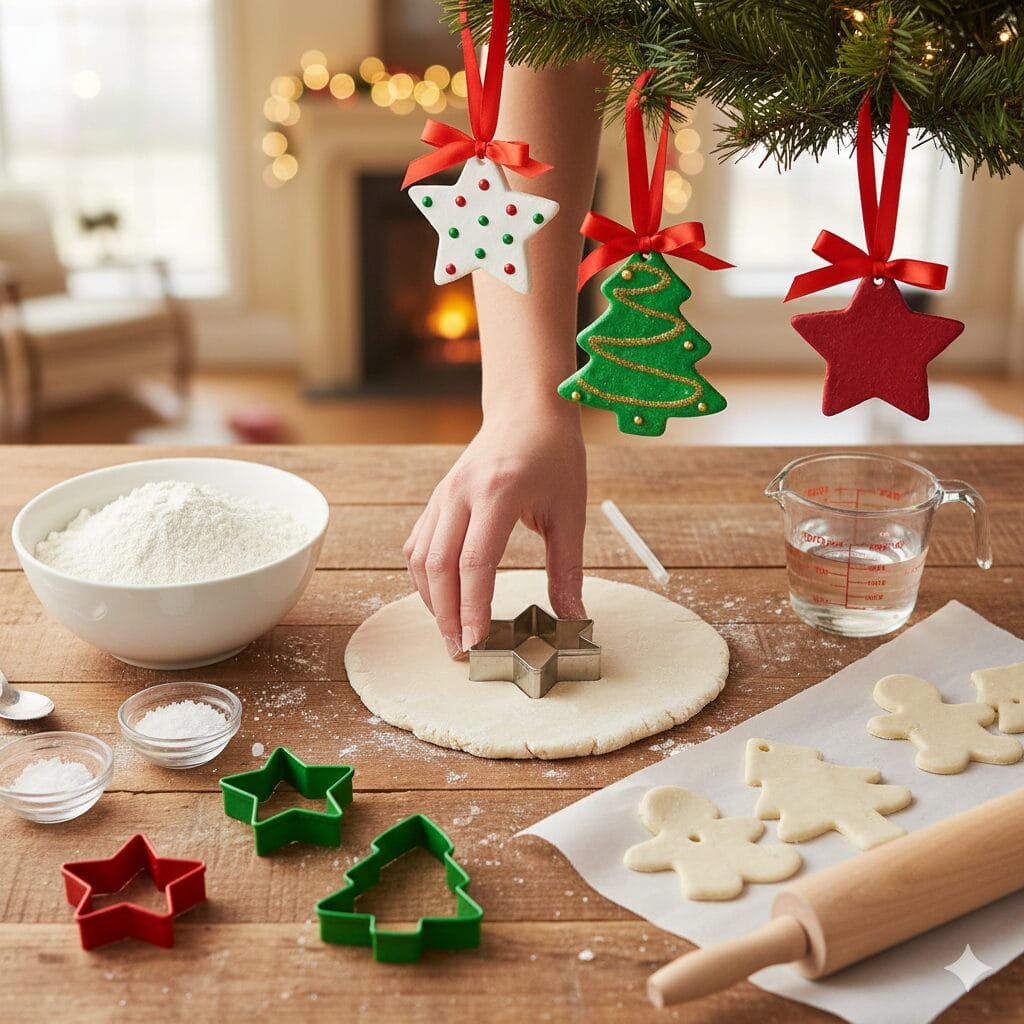
Follow these detailed steps to create beautiful, long-lasting salt dough ornaments.
Step 1: Gather Your Materials – Preparation is Key!
Before you begin, ensure you have all your ingredients and tools laid out. This makes the process much smoother, especially when crafting with children. Having a clean, open workspace is also beneficial.
Step 2: Mixing the Perfect Salt Dough
- Combine Dry Ingredients: In your large mixing bowl, thoroughly combine the 2 cups of all-purpose flour and 1 cup of fine grain salt. Using fine salt helps it dissolve better and results in a smoother dough texture.
- Add Water Gradually: Slowly pour in about 3/4 of the warm water, mixing with a sturdy spoon. Continue mixing, adding the remaining water tablespoon by tablespoon, until a shaggy dough forms.
- Knead the Dough: Transfer the dough to a lightly floured surface. Knead the dough for 5-10 minutes. This is crucial for developing the gluten in the flour and incorporating the ingredients fully, resulting in a smooth, elastic, and pliable dough.
- Troubleshooting:
- Too Sticky: If the dough is too sticky and clings to your hands, add a small amount of flour (1 tablespoon at a time) and continue kneading until it reaches the right consistency.
- Too Crumbly/Dry: If the dough is too dry and falls apart, add a tiny bit more warm water (1 teaspoon at a time) and knead until it comes together smoothly.
- Troubleshooting:
- Test for Perfection: The dough should be smooth, firm, and easy to roll without cracking excessively or sticking to your hands. It should feel similar to sugar cookie dough.
Step 3: Rolling, Cutting, and Shaping Your Ornaments
- Prepare Your Surface: Lightly flour your clean work surface and your rolling pin.
- Roll it Out: Take a portion of the dough and roll it out evenly. The ideal thickness for ornaments is about 1/4 inch (0.6 cm). If it’s too thin, the ornaments might be fragile; too thick, and they’ll take much longer to dry.
- Cut Your Shapes: Use your favorite cookie cutters to cut out shapes. Press firmly and evenly to get clean edges. Gently peel away the excess dough, re-knead it, and re-roll to make more ornaments until all the dough is used.
- Create Hanging Holes: This is a vital step! Use a drinking straw, a skewer, or the tip of a pencil to poke a hole near the top of each ornament. Ensure the hole is large enough for your chosen ribbon or string. If the hole is too close to the edge, it might break when hanging. You can also emboss patterns or initials into the dough at this stage using stamps or textured items.
- Transfer to Baking Sheet: Carefully transfer your cut-out ornaments to a baking sheet lined with parchment paper. Leave a little space between each ornament.
Step 4: Drying Your Salt Dough Ornaments
Proper drying is critical for the longevity and durability of your salt dough ornaments. You have two main methods: oven drying or air drying. Oven drying is generally preferred for consistency and speed.
Method 1: Oven Drying (Recommended for Durability)
- Preheat Oven: Preheat your oven to a very low temperature, around 200-250°F (90-120°C). The goal is to dehydrate the dough slowly, not to cook it.
- Bake Low and Slow: Place the baking sheets with your ornaments into the preheated oven.
- Baking Time: Bake for approximately 2-4 hours. Thinner ornaments will dry faster, while thicker or larger ornaments might take longer.
- Flip Halfway: After about 1-2 hours, carefully flip the ornaments over. This ensures even drying and prevents warping.
- Check for Dryness: Ornaments are fully dry when they are hard to the touch, feel lightweight, and no longer have any “give” when pressed. They should be uniformly opaque and not look wet in the center. If they still feel soft or damp, continue baking until completely dry. If they start to brown too much, lower the oven temperature or cover loosely with foil.
- Cool Completely: Once dry, remove from the oven and transfer to a wire cooling rack to cool completely before decorating. This allows any residual moisture to escape.
Method 2: Air Drying (Time-Consuming but Energy-Saving)
- Placement: Place your ornaments on a wire cooling rack (this allows air circulation around all sides) or a parchment-lined tray.
- Environment: Find a warm, dry spot in your home. Avoid humid areas.
- Drying Time: This method takes significantly longer, typically 2-7 days, or even longer for thicker pieces.
- Flip Daily: Flip the ornaments at least once a day to promote even drying and prevent curling.
- Check Thoroughly: Ensure they are rock-hard and completely dry before decorating, otherwise, they may mold.
Step 5: Decorating Your Salt Dough Ornaments
This is where your creativity truly shines! Make sure your ornaments are completely cooled and dry before you begin.
- Paints: Acrylic paints are ideal for salt dough. They offer vibrant colors, dry quickly, and are readily available.
- Base Coat: You can paint a white base coat first for brighter colors, or paint directly onto the natural dough color.
- Layering: Apply thin layers of paint. Let each layer dry completely before adding another color or detail to prevent smudging.
- Details and Embellishments:
- Fine Brushes: Use fine-tipped brushes for intricate details, outlines, and facial features (if making figures).
- Glitter: Apply a thin layer of craft glue where you want glitter, then sprinkle it on. Shake off the excess.
- Markers: Permanent markers can be used for drawing fine lines or adding text once the paint is dry.
- Beads/Sequins: Glue small beads or sequins onto your ornaments for extra sparkle and texture.
- Drying: Allow all paints and glues to dry fully. This might take several hours, depending on the thickness of the paint.
Step 6: Sealing and Preserving for Longevity
Sealing your salt dough ornaments is a crucial step to ensure they last for years. It protects against moisture, humidity, and general wear and tear, and enhances the vibrancy of your decorations.
- Choose Your Sealant:
- Clear Acrylic Spray Varnish: This is often the easiest and most effective. Choose a matte, satin, or glossy finish based on your preference. Apply in a well-ventilated area with even, light coats.
- Mod Podge: A popular craft glue and sealer. Apply 2-3 thin coats with a brush, allowing each coat to dry completely. It leaves a slightly tacky finish if not fully dried between coats.
- Clear Nail Polish: Great for small ornaments or touch-ups, providing a glossy, durable finish.
- Application:
- Ensure the ornaments are completely dry from decoration before sealing.
- Apply the sealant evenly. If using a spray, hold it about 6-8 inches away and apply in short, sweeping motions.
- Allow each coat to dry thoroughly before applying the next, and before handling extensively.
- Thread Ribbon: Once the sealant is completely dry (this can take 24-48 hours depending on the sealant), thread your chosen ribbon, string, or twine through the pre-made hole. Tie it off securely.
Your beautiful, handmade salt dough ornaments are now complete!
Troubleshooting & Expert Tips for Salt Dough Success
Even though salt dough is forgiving, a few tips can ensure your crafting experience is smooth and successful.
Common Issues & Solutions:
- Ornaments Puffing Up/Bubbling: Your oven temperature might be too high. Salt dough needs to dehydrate, not bake. Lower the temperature and increase drying time.
- Cracking Ornaments: Can be caused by kneading the dough too little (not enough gluten development), rolling it too thin, or drying it too quickly at too high a temperature. Ensure proper kneading, consistent thickness, and low-heat drying.
- Ornaments Browning: Oven temperature is too high. Reduce heat significantly. Browning means it’s cooking, not just drying.
- Sticky Dough: Add more flour, a tablespoon at a time, while kneading.
- Crumbly Dough: Add more water, a teaspoon at a time, while kneading.
- Ornaments Curling/Warping: This usually happens if they dry unevenly. Flipping them halfway through oven drying, or daily for air drying, helps prevent this. Using a wire rack for air drying is also beneficial.
Pro Tips for the Best Results:
- Stale Dough: Salt dough can be stored! Wrap any unused dough tightly in plastic wrap and keep it in the refrigerator for a few days. Allow it to come to room temperature before re-rolling.
- Texture: If you desire an ultra-smooth finish, you can lightly sand dried ornaments with fine-grit sandpaper before painting. Wipe off any dust thoroughly.
- Handprints/Footprints: Salt dough is fantastic for capturing tiny handprints or footprints. Press the hand/foot firmly into a rolled-out piece of dough, then cut around it, make a hole, and dry. These make incredibly precious keepsakes.
- Texturing: Use items like lace, leaves, twigs, or even pine needles to press patterns into the rolled-out dough before cutting for unique textures.
- Natural Fragrance: You can add a pinch of ground cinnamon, nutmeg, or cloves to your dry ingredients for a subtle, natural fragrance, especially nice for holiday ornaments (though be aware it can slightly tint the dough).
- Display: Don’t just hang them on a tree! Salt dough ornaments can be tied onto gift packages, used as napkin rings, or strung together to make garlands.
Creative Variations & Project Ideas
The beauty of salt dough lies in its adaptability. Here are some inspiring ideas to take your crafting beyond simple cookie cutters:
Holiday & Seasonal Themes:
- Christmas: Traditional stars, trees, gingerbread men (perfect for our sweet-themed blog!), snowflakes, angels. Paint them in classic reds, greens, silvers, and golds.
- Halloween: Spooky ghosts, pumpkins, bats, or even little Frankenstein monsters.
- Valentine’s Day: Hearts, “love” letters, or even small embossed key shapes.
- Easter/Spring: Eggs, bunnies, flowers, butterflies.
- Fall/Thanksgiving: Leaves (pressed with real leaves for texture!), acorns, pumpkins.
Beyond Ornaments:
- Gift Tags: Instead of traditional paper tags, use smaller salt dough shapes. Write names with a fine-tipped permanent marker or paint pen.
- Garlands: Make multiple themed shapes (e.g., stars, circles, letters) and string them together to create a festive garland for a mantel or doorway.
- Figurines/Sculptures: For older crafters, salt dough can be molded into simple 3D figures like little animals, small bowls, or decorative shapes. Just ensure they are not too thick for even drying.
- Keepsake Coasters: Roll thicker circles (1/2 inch), emboss with patterns, and once sealed, they can serve as decorative coasters.
- Magnets: Glue a strong magnet to the back of a small, decorated salt dough piece for a personalized fridge magnet.
Incorporating Natural Elements:
- Leaf Impressions: Press real leaves firmly into rolled dough to capture their intricate vein patterns, then cut around them for stunning natural ornaments.
- Cinnamon Sticks/Twigs: You can gently press small cinnamon sticks or thin twigs into the dough before drying for added rustic charm and scent.
Conclusion: A Craft That Lasts a Lifetime
DIY Salt Dough Ornaments are more than just a craft project; they are a timeless tradition that brings joy, creativity, and a touch of handmade charm into your home. From their humble origins of flour, salt, and water, these simple ingredients transform into robust, personalized treasures that can be cherished for years, even generations.
This comprehensive guide has equipped you with all the knowledge and tips to create beautiful, long-lasting salt dough masterpieces. Whether you’re crafting with little ones, creating heartfelt gifts, or simply indulging in a mindful creative activity, the process is as rewarding as the finished product. And for our sweet-loving community, these “un-edible cookies” offer a delightful, calorie-free way to express your creativity!
So, gather your supplies, roll up your sleeves, and embark on a crafting adventure that promises to fill your home with unique beauty and cherished memories. Happy crafting!